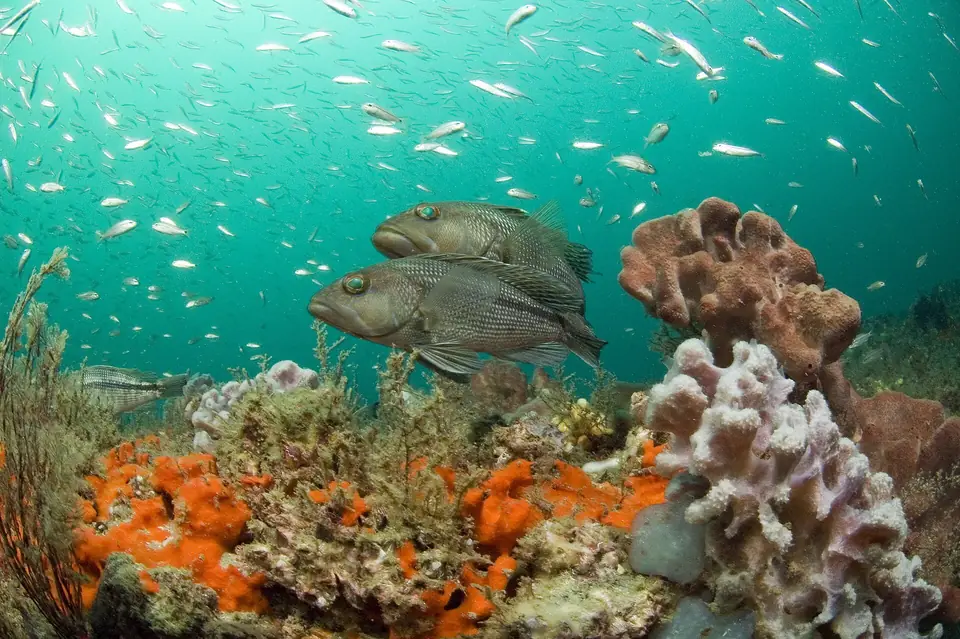
Black sea bass at a glance
- Where
- Artificial reefs, live bottom, ledges, and wrecks
- Season here
- Year-round on the reefs; keeping them depends on federal seasons and limits
- How
- Two-hook bottom rigs with squid or cut fish; small jigs
- Big ones
- Large males ("knotheads") with a blue hump, usually in deeper water
- Limits
- Snapper-grouper rules apply; check SAFMC
Where they live
Black sea bass are reef fish. They gather on SCDNR's artificial reefs a few miles off the beach, on natural live bottom and ledges in 50 to 120 feet of water, and on offshore wrecks. Fish on near reefs tend to be small; bigger fish come from deeper, less-fished bottom.
Like many reef fish, black sea bass change sex: most start as females and some become males as they grow. Big males develop a blue-black color and a hump on the head, and anglers call them "knotheads."
How to catch them
- Rig: a standard two-hook bottom rig (dropper loops) with 2/0 to 4/0 circle hooks and enough lead to hold bottom, usually 4 to 16 ounces depending on depth and current.
- Bait: squid strips or cut fish. Headboats supply both.
- Technique: drop to the bottom, reel up a turn, and wait for the rapid tap-tap bite. With circle hooks, do not jerk: reel steadily and the hook sets itself.
- Upgrade: small vertical jigs and soft plastics often catch larger fish.
Rules and release
Black sea bass are part of the snapper-grouper fishery. Federal rules from the South Atlantic Fishery Management Council set a minimum size and a bag limit, and seasons and limits have changed over the years. Check the current SAFMC regulations before you keep fish. Because many sea bass are released, the required descending device, circle hooks, and quick handling help more of them survive. See bottom fishing and reefs.
On a trip
Half-day headboats catch lots of sea bass, many of them short. Full-day and Gulf Stream headboats and private bottom trips run to deeper water with bigger fish. See headboats and the directory.
Who you will deal with
SCDNR artificial reef program
South Atlantic Fishery Management Council
4055 Faber Place Drive, Suite 201, North Charleston, SC 29405
More offices, with notes, are on the local resources page.
Find local help
Listings come from public records or from the business itself. A listing is not a recommendation.
Common questions
Why do I have to throw so many sea bass back?
Black sea bass have a minimum size, and many fish on near reefs are just under it. Bigger fish are usually farther offshore. Use a descending device or vent tool for fish with barotrauma, as the crew directs.
Are black sea bass good to eat?
Yes. They have mild, flaky white meat and are a favorite for frying or baking whole.
Related guides

More nearshore and pier fish
Sources
Official sources checked on October 29, 2026.