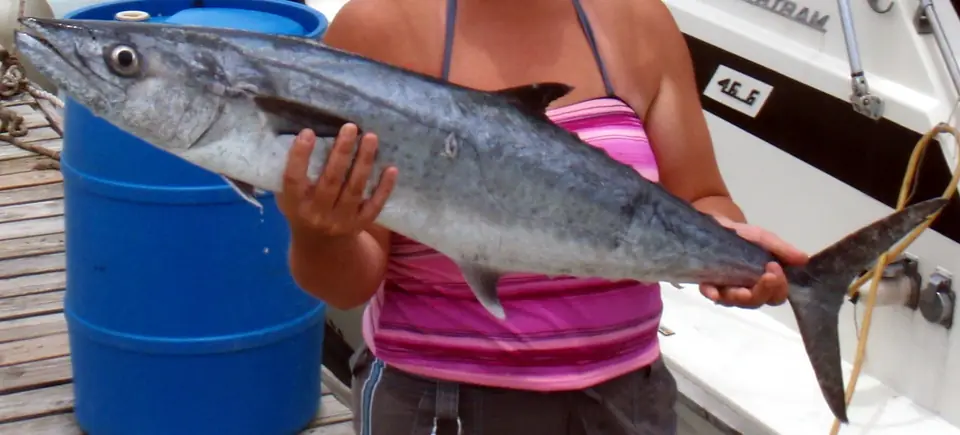
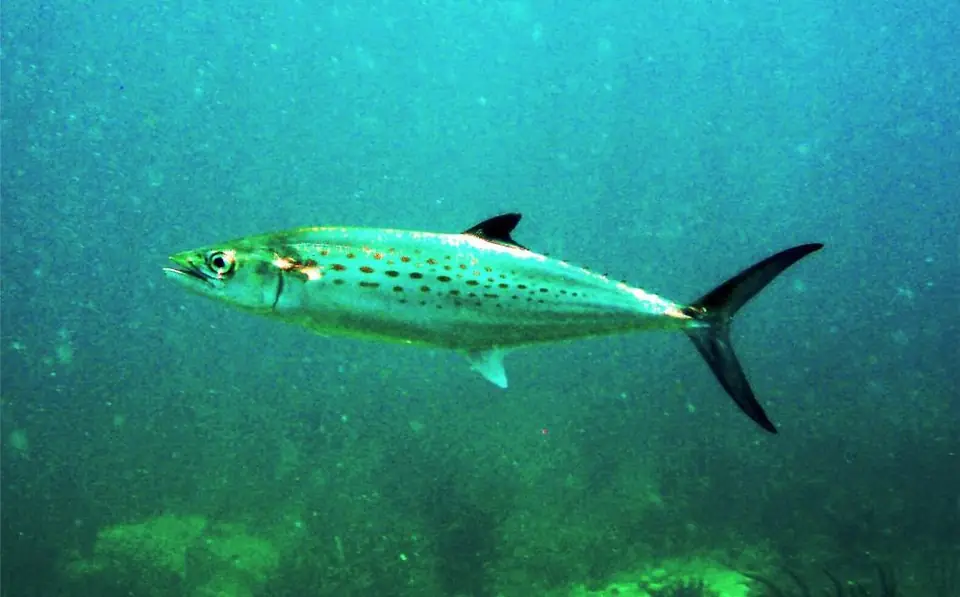
King mackerel at a glance
- Also called
- Kingfish, king, "smoker" (big ones)
- Season here
- Spring (about April to May) and fall (late September to November); offshore in summer
- Where
- Pier ends, beaches, nearshore reefs and live bottom, out to the Gulf Stream edge
- How
- Slow-trolling live menhaden or bluefish; trolling spoons and dead cigar minnows or ribbonfish
- SC record
- 62 lb, Charleston, 1976 (SCDNR)
- Limits
- Measured by fork length; check current state and federal rules
When they are here
King mackerel migrate along the Southeast coast with water temperature. On the Grand Strand, they move close to the beach in spring, as the water warms into the upper 60s and 70s, and again in fall, from late September into November, as bait schools pour down the coast. In summer, most kings are farther offshore on reefs and live bottom. Winter fish stay well offshore or move south.
Where to find them
- Pier ends, especially on the north end of the Grand Strand, in spring and fall.
- Nearshore reefs and live bottom within 3 to 20 miles, where bait schools hold.
- Tide lines and bait pods along the beaches in fall.
- Ledges and the shelf edge in summer.
How they are caught
The classic method is slow-trolling live bait: a menhaden (pogy), bluefish, or mullet on a wire leader with a "stinger" treble hook near the tail, pulled just fast enough to keep it swimming. Kings strike from below and often hit the tail, which is why the stinger hook matters. Boats also troll spoons and dead baits such as cigar minnows and ribbonfish.
Kings have sharp teeth; use wire leaders. They make one or two long, fast runs, so set the drag light and let them go.
On a trip
A nearshore charter or half-day trolling trip in October is the best visitor shot at a big king. Offshore trips catch kings while trolling for mahi and wahoo. See types of fishing trips and the directory.
Tournaments
King mackerel tournaments are a Grand Strand institution, with fall events such as Little River's Rumble in the Jungle. See tournaments and 2026 results.
Rules
King mackerel are managed by the South Atlantic Fishery Management Council in federal waters and SCDNR in state waters. They are measured by fork length (snout to the fork of the tail). Size and bag limits are set by regulation and can change; check the state and federal pages before you keep one.
Who you will deal with
South Atlantic Fishery Management Council
4055 Faber Place Drive, Suite 201, North Charleston, SC 29405
More offices, with notes, are on the local resources page.
Find local help
Listings come from public records or from the business itself. A listing is not a recommendation.
Common questions
Can you catch king mackerel from a Myrtle Beach pier?
Yes. Several Grand Strand piers have a tradition of king fishing from the end, using a live bait suspended under a float or slid down an anchored line. It takes patience and heavy tackle; ask the pier about its rules for king fishing.
Are king mackerel good to eat?
They are oily and strong-flavored. Many anglers smoke them or eat smaller kings fresh. King mackerel are on the FDA's list of fish with the highest mercury levels, which the agency advises pregnant women, women who may become pregnant, and young children to avoid.
How big do kings get here?
Most are 10 to 25 pounds. Fall tournament winners are often over 40 pounds; the 2026 Rumble in the Jungle's top fish on the unofficial leaderboard was 41.80 pounds.
Related guides

More nearshore and pier fish
Sources
Official sources checked on October 29, 2026.
- SC Fishing Regulations (official SCDNR guide): saltwater finfish size and catch limits
- South Atlantic Fishery Management Council: coastal migratory pelagics regulations
- SCDNR: Saltwater state records
- FDA: Advice about eating fish (king mackerel on the choices-to-avoid list)
- Rumble in the Jungle KMT: results