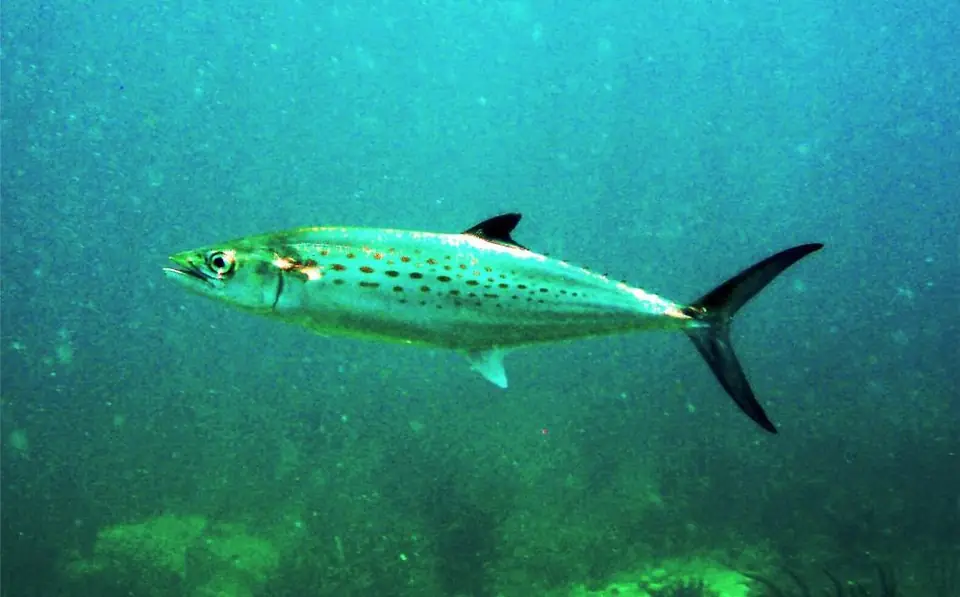
Spanish mackerel at a glance
- Season here
- About April to October, peaking in summer
- Where
- Piers, beaches, inlet mouths, and nearshore within a few miles
- How
- Fast-retrieved spoons, Gotcha plugs, small trolling spoons behind planers
- SC record
- 11 lb, Myrtle Beach, 1983 (SCDNR)
- Limits
- Check current SC rules
When and where
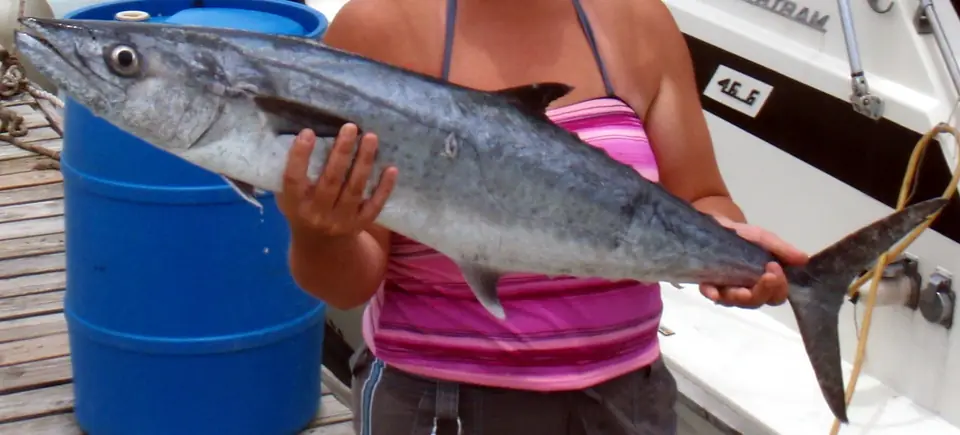
Spanish mackerel arrive on the Grand Strand as the water warms in spring, usually around April, and stay through October, with the best fishing in summer. They feed on schools of glass minnows and small baitfish, often in plain sight: look for birds diving and water spraying as fish slash through bait.
Good places to find them:
- The piers, especially early in the morning and around tide changes.
- Along the beaches, just outside the breakers.
- Inlet mouths at Little River and Murrells Inlet on moving tides.
- Nearshore reefs and tide lines within a few miles of shore.
How to catch them
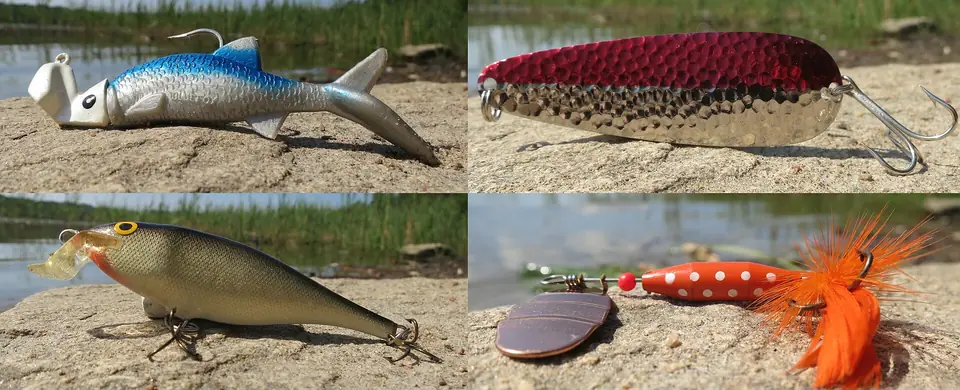
From a pier or the beach, cast a Gotcha plug, casting spoon, or small diamond jig and reel it in fast. Spanish are quick and lose interest in slow lures. Use a short, light wire or heavy fluorocarbon leader; they have sharp teeth.
From a boat, captains troll small spoons (often Clark or Drone spoons) behind planers or trolling sinkers at 6 to 7 knots. When you find a school, you can catch dozens.
Eating them
Spanish mackerel are best fresh: bleed and ice them right away. They do not freeze as well as white-fleshed fish.
Big ones
The South Carolina record, 11 pounds, was caught at Myrtle Beach in 1983, according to SCDNR. Most Spanish here are 1 to 4 pounds; fish over 6 pounds are notable.
Rules
Spanish mackerel are regulated by SCDNR in state waters and the South Atlantic Fishery Management Council in federal waters. Check the current limits before you keep fish. See also king mackerel and fishing piers.
Find local help
- Fishing piers on the Grand Strand
- Fishing charters on the Grand Strand
- Bait and tackle shops on the Grand Strand
Listings come from public records or from the business itself. A listing is not a recommendation.
Common questions
What is the best lure for Spanish mackerel from a pier?
A small, shiny lure retrieved fast: a Gotcha plug, a casting spoon, or a diamond jig. Early morning, when they push bait against the beach, is usually best.
How do I tell a Spanish mackerel from a king?
Spanish mackerel have gold or yellow spots on their sides and no sharp dip in the lateral line. Young king mackerel have a lateral line that drops sharply below the second dorsal fin. The difference matters because the limits differ.
Related guides

More nearshore and pier fish
Sources
Official sources checked on October 29, 2026.